In Sanskrit, the root man means “to reflect.” From it emerges manana — contemplation — and mantra:
“that which protects through reflection.”
But what needs protecting?
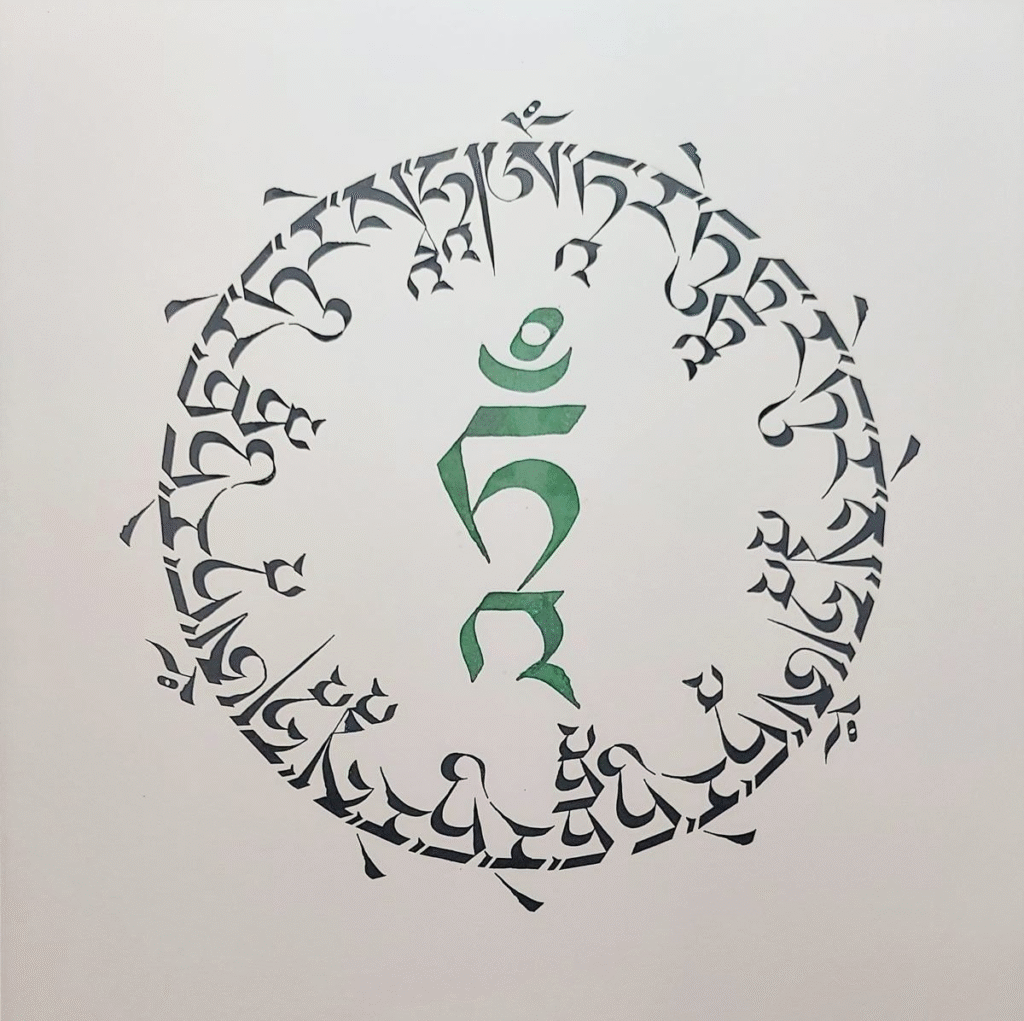
Not the body.
Not the ego’s pride or fear.
What a mantra protects is our inner coherence — the part of us that becomes fractured by old stories, forgotten griefs, inherited tendencies, and the subtle self-negation that creeps in unnoticed.
Mantra, is a path back to wholeness.
A way of remembering the Self that existed before conditioning, before expectations, before the world began shaping us.
A mantra is an invitation — an amantrana — extended to consciousness itself.
It is a way of saying: “Come. Reveal yourself through me.”
Nimantran, the act of calling, is the moment the practitioner opens inner space for a deeper intelligence to enter.
Here, mantra is not a ritual act.
It is a relational act.
It weaves together:
- subject and object
- human and divine
- sound and silence
Like two threads crossing, mantra becomes the meeting point where practitioner and deity merge into one lived reality. And like all sacred things, its power unfolds slowly — beginning quietly, like a guest standing at your doorway, waiting to be welcomed in.
Mantra as a Mechanism of Transformation
A mantra works on two planes simultaneously:
- Psychological — dissolving habitual self-stories, emotional patterns, and conditioned responses
- Energetic — shifting identity from the body-bound “I” into an expanded field of awareness
In Sanskrit thought, mantra is not symbolic.
The sound is the deity.
Its phonetic structure is considered a living presence.
When chanted, the deity is born in the breath.
If the deity lives within you, chanting becomes the process of becoming the deity — absorbing its qualities into psyche, soma, and consciousness.
Modern neuroscience echoes this. Repeated sound patterns can soften emotional reactivity, quiet self-referential thinking, and open the intuitive and creative states associated with deep meditation.
In this way, mantra is both a spiritual and subtle psychological technology — a bridge between breath, brain, and the metaphysics of inner awakening.
The Four Stages of Mantric Depth: From Sound to Silence
Classical texts describe four stages through which mantra travels:
Vaikhari — external speech
Spoken aloud, shaping breath, vibration, and rhythm.
Madhyama — inner resonance
The mantra is no longer spoken but heard internally.
Pashyanti — the visionary state
The mind begins to “see” the mantra as image, pulsation, or archetype.
Para — the silent origin
Word and meaning merge; the mantra dissolves into pure awareness.
At this final stage, the mind becomes mantra.
Tantric texts call this mantra jagriti — the mantra alive in the background like a sacred hum.
It then ripens into mantra chaitanya, where the mantra becomes living consciousness — not repeated, but known.
And finally comes drashta, the seer-state, where the practitioner perceives the mantra as the inner pulsation of mind itself. Creativity flows naturally here because knowledge becomes self-revealing — the ancient ṛṣi-state, where insight arrives as revelation rather than acquisition.
Sound as the Sculptor of Reality
Across tantric texts, Jain metaphysics, Yogini traditions, and even contemporary contemplative science, one truth echoes: sound reshapes consciousness.
A mantra is not merely a word.
It is a device that:
- reorganises perception
- awakens dormant memory
- alters emotional patterns
- changes how we experience reality
Language does not simply describe life — it creates it.
A mantra spoken by a teacher carries its own resonance — a transmission shaped by lived experience. It travels through sound and lands within the disciple’s heart, adjusting karmic tension and revealing what is ready to be transformed.
Mantras can:
- pacify mental predispositions (shamaka)
- surface buried patterns for healing
- purify unresolved tendencies and karmic burdens
When a mantra becomes fully alive, it begins to play through you.
The Triad of Transformation: Mantra, Yantra, Deity
In Tantric traditions and cosmology, transformation unfolds when three elements align:
- Mantra — the vibrational body
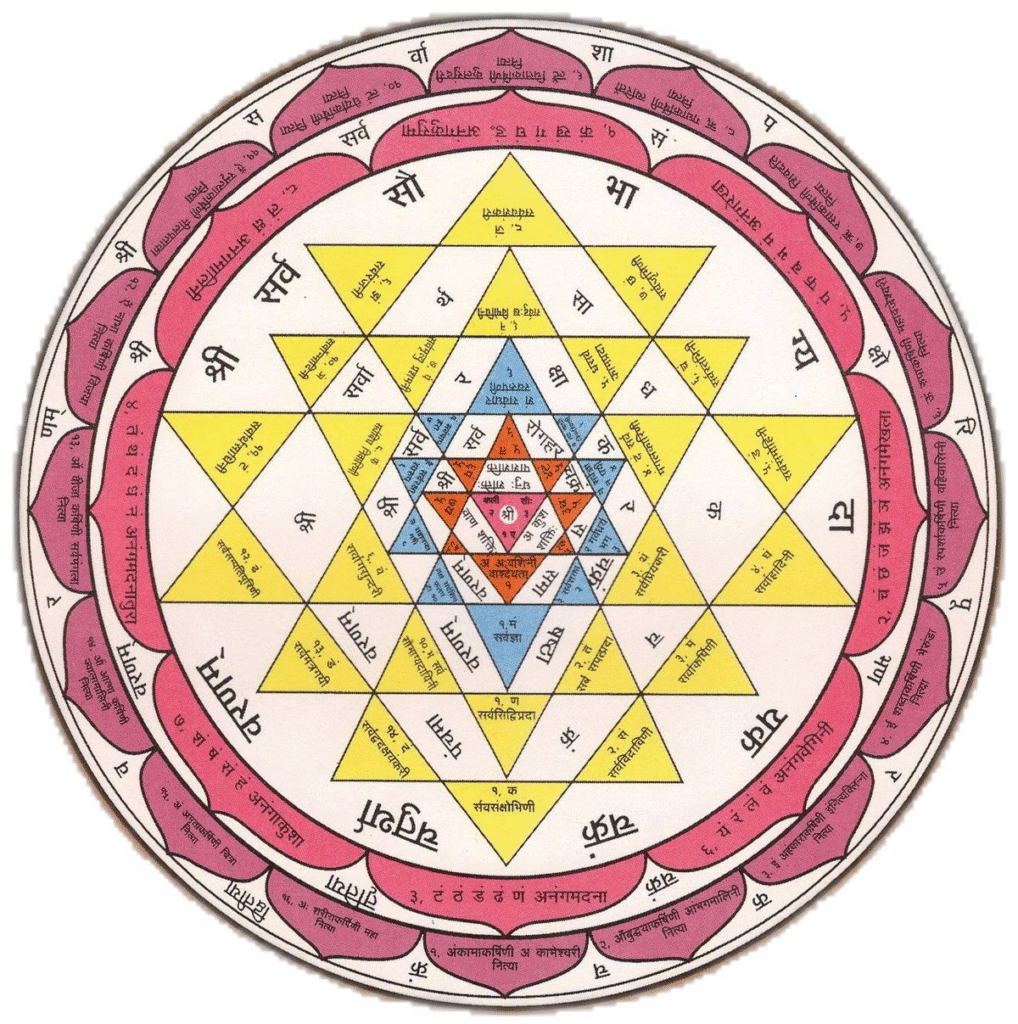
- Yantra — the geometric body
- Deity — the imaginal or archetypal body
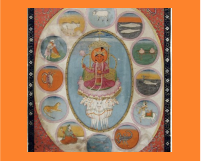
The physical body is considered a living yantra — a distilled diagram of cosmic principles. Mantra activates this inner geometry, awakening latent capacities, archetypes, and karmic imprints.
The goal is not worship.
It is totality — a fuller, more integrated expression of one’s essence.
When uttered, a mantra awakens presence within you. This is why it feels different on different days:
- soothing
- agitating
- illuminating
- clarifying
Mantras clear pathways, release karmic residue, and awaken inner memory.
A mantra enters your life the way fire enters wood; slowly, then entirely.
The Music Beneath the World
The Sama Veda speaks of the “sound of no sound” — a vibration beneath all things.
Mantra practice attunes you to this deeper rhythm, the cosmic meter (chandas) that exists without beginning or end. It is the pulse behind intuition, synchronicity, creativity, and insight.
A mantra is not just sound.
It is the space that sound opens.
A conversation between:
- your present self and your deeper self
- the finite and the infinite
- your human story and your soul’s memory
It is a way of stepping beyond limiting narratives and entering a field where you are no longer separate from deity, consciousness, or the world around you.
When practiced with sincerity, mantra becomes the most intimate companion of your spiritual life.
It reveals hidden courage.
It awakens intuition.
It softens hardened places.
It transforms forgotten ones.
It brings the mind, body, and heart back into harmony.
A mantra is a doorway.
An invitation.
A homecoming.
And all it asks is that you speak — until the sound leads you back to silence.